A snow coach passenger sled is safer than a traditional sled because it is built to be towed, with seatbelts, an enclosed cabin, and a rigid hitch. A traditional sled, on the other hand, relies on gravity, has no real brakes, and leaves riders exposed.
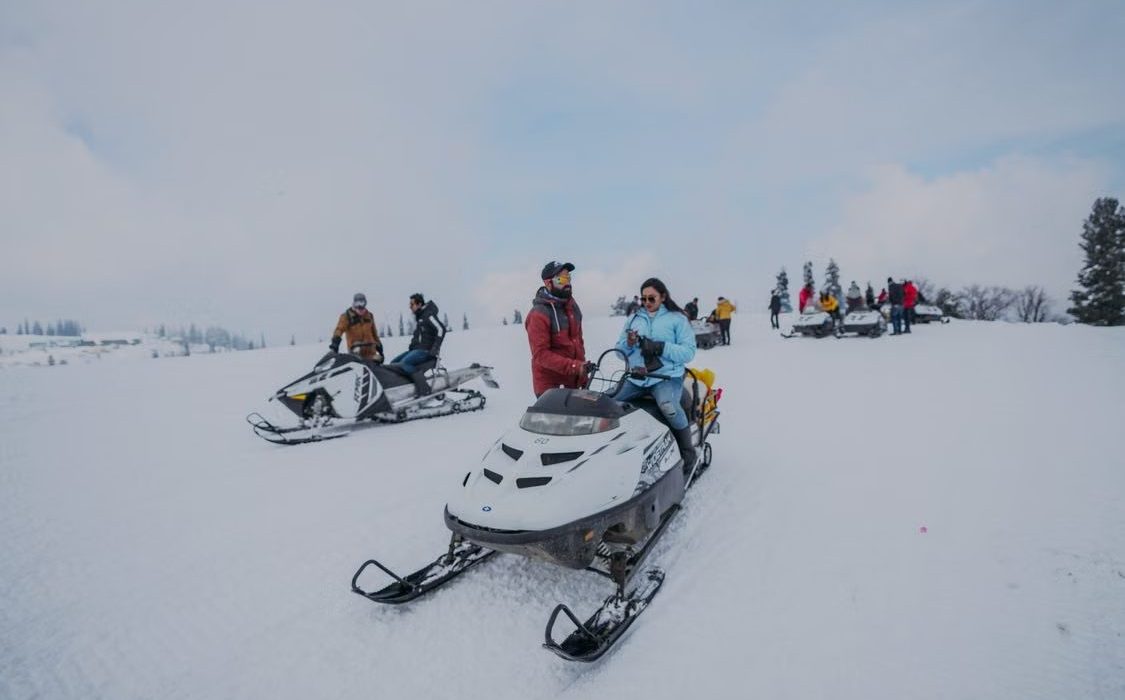
Park City sits at about 7,000 feet in Utah’s Wasatch Mountains, where deep winter snow covers the surrounding backcountry for months. Guided tours around the town often climb to 9,000 feet or higher. Not every visitor wants to drive a snowmobile through that terrain, especially young children or older family members.
That is where enclosed passenger sleds come in. Families considering snow coach tours in Park City can enjoy guided backcountry experiences without requiring every member to operate a snowmobile. These sleds allow non-riders, young children, and older family members to travel comfortably with the group. The sections below explain the differences and what still matters for safety.
What Is a Snow Coach Passenger Sled?
A snow coach is a small, enclosed cabin mounted on skis and pulled behind a snowmobile. Most models seat one adult or two children. The cabin shields passengers from wind and snow while the snowmobile driver controls speed and direction.
Snow coaches suit passengers who cannot or prefer not to drive, such as young children or visitors with no snowmobile experience. They also let the whole group travel the same trail at the same pace.
Why Traditional Sleds Cause So Many Injuries
Traditional sleds are simple, but that simplicity creates risk. Researchers at Nationwide Children’s Hospital found that 220,488 people were treated in U.S. emergency departments for sledding injuries from 2008 through 2017. The head was the most frequently injured body part for both children and adults.
Common problems with traditional sleds include:
- No way to brake effectively on steep or icy slopes
- Limited steering, especially on saucers and snow tubes that spin
- Riders sitting fully exposed with nothing to hold them in place
- Collisions with trees, rocks, or other sledders
How Snow Coach Design Reduces Risk
Snow coaches are designed around the problems that make traditional sledding risky. Each feature below targets a specific hazard, from riders being thrown off to poor control on the snow.
Seatbelts and an Enclosed Cabin
Passengers stay belted inside a hard shell, so they are far less likely to be thrown out over bumps.
A Trained Driver Controls the Ride
The passenger does not steer or brake. On a guided tour, an experienced driver sets the pace on established trails.
Lights, Reflectors, and Suspension
Many snow coaches include brake lights, running lights, and reflectors for visibility. Shock-absorbing suspension also softens the ride over uneven snow.
Safety Still Depends on Proper Use
A snow coach is designed for towing, but an ordinary sled is not. Nationwide Children’s Hospital warns that children should never ride a regular sled pulled by a snowmobile, ATV, or car.
Before booking snow coach tours, Park City operators run and ask about passenger age limits, seatbelt use, and the trail route. Dress in warm layers, even inside the cabin.
Quick Summary
- Snow coaches are enclosed cabins built specifically to be towed behind a snowmobile.
- Seatbelts and a hard shell keep passengers secure over bumps.
- A trained driver controls speed and steering, not the passenger.
- Families choosing snow coach tours in Park City can enjoy guided backcountry trips without having to operate a snowmobile themselves.
- The head is the most common injury site in sledding accidents.
- Never tow an ordinary sled behind a snowmobile or other vehicle.