The Impact of Inflation on the Algerian Dinar in 2025
In-depth analysis of economic factors influencing the value of the Algerian dinar against international currencies.
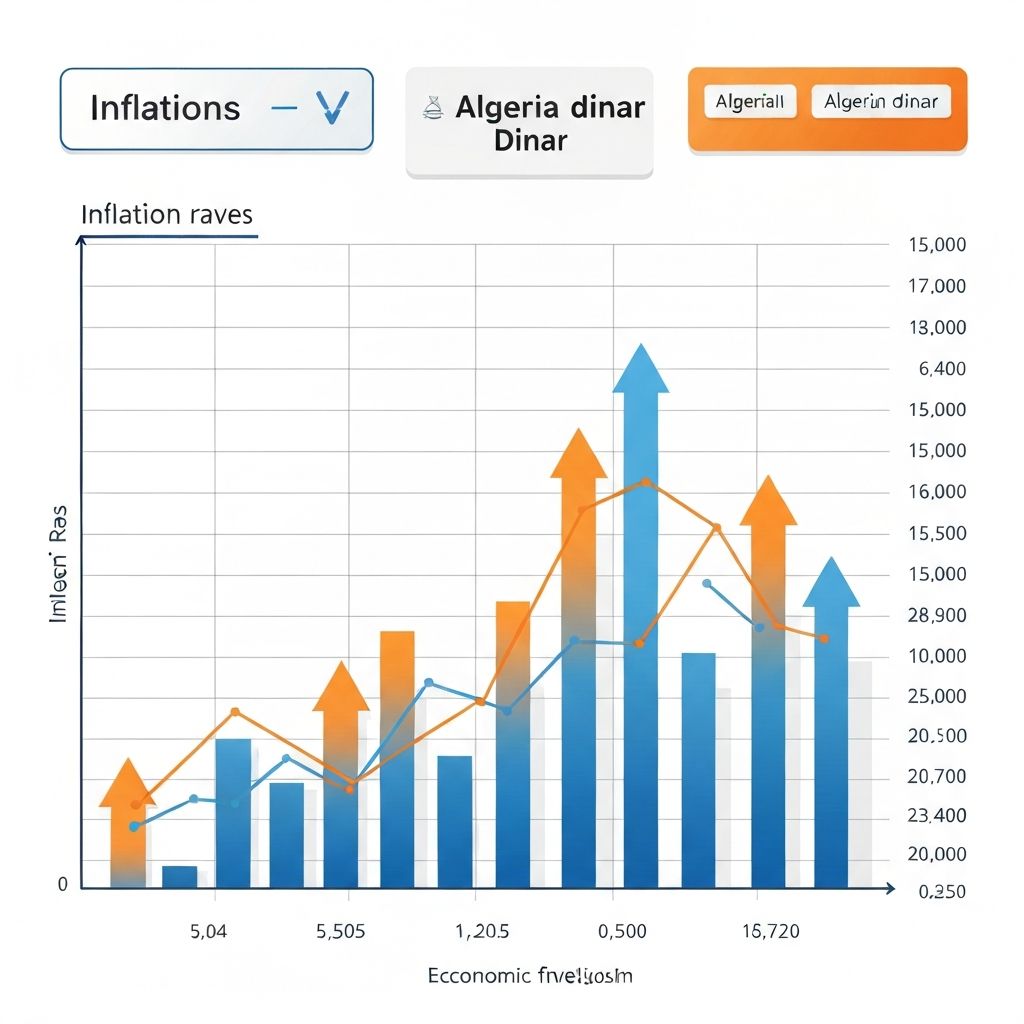
In-depth analysis of economic factors influencing the value of the Algerian dinar against international currencies.
Global inflation continues to affect foreign exchange markets, and Algeria is no exception. In this article, we explore how local and international monetary policies impact the purchasing power of Algerian citizens.
Key Inflation Factors
Inflation in Algeria is influenced by several major economic factors that determine the country’s monetary stability.
1. Oil Prices
Oil represents more than 95% of Algerian exports. Oil price fluctuations have a direct impact on:
- State foreign currency revenues : Principal source of budget financing
- Algerian dinar stability : Direct correlation with oil prices
- Imported inflation : Effect on costs of imported goods
2. Monetary Policies
The Bank of Algeria plays a crucial role in managing inflation through several tools:
Monetary Policy Instruments
- Money supply control : Regulation of liquidity
- Key interest rates : Influence on savings and investment
- Bank reserve requirements : Control of credit
3. Impact on Parallel Market
Official inflation directly influences exchange rates in the parallel market, sometimes creating a significant gap with the official rate.
Recommendations for Citizens
Facing this complex economic situation, here are some practical tips:
Protection Strategies
- Diversify savings : Do not concentrate all your assets in dinars
- Regularly monitor exchange rates : Use reliable monitoring tools
- Understand economic mechanisms : Inform yourself about influencing factors
Conclusion
2025 looks crucial for the Algerian economy, with major challenges but also opportunities for structural reforms that could stabilize the dinar in the long term.